How to rent an apartment in Colombia as a foreigner: full process, documents and pitfalls
Updated: 13 October 2026 · Colombia Untold
Quick answer: To rent an apartment in Colombia as a foreigner you need a passport with visa or a cédula de extranjería, proof of income, references and, often, a guarantor or rental policy. An urban housing lease is governed by Law 820 of 2003; always visit the property, demand a written contract and inventory and never pay advances without a receipt.
Renting an apartment in Colombia is, in theory, simple: you see a listing, visit, sign and move in. In practice, for a newly arrived foreigner the process has layers that do not exist in other countries: the figure of the guarantor, building-fee quotes, horizontal-property formalities, payments in pesos with exchange rates that move the budget, a contract that must be read in detail and intermediaries who charge for services that do not always add value. This guide walks through the full process from search to handover, shows which documents to prepare, how to assess a listing, what the contract must say, which costs appear besides the rent, how to protect yourself from scams and what to do if something goes wrong. Figures are references and customs vary by city; for legal doubts consult a tenancy lawyer.
Before you start: define your real budget
The rent in the listing is not what you will really pay each month. Add to the rent the building fee (which in buildings with a pool, gym and 24-hour front desk can be significant), utilities, internet, gas, parking if not included, insurance for the property or your contents and a maintenance fund. A reasonable rule is that total housing cost should not exceed 30 to 40% of your monthly income. When your income comes in dollars or euros, consider exchange-rate movement: a peso that strengthens makes your rent dearer in foreign currency. To estimate the cost of living in your city, see Cost of Living in Medellín 2026: Complete Breakdown, Cost of Living in Bogotá 2026 and Costo de Vida en Cartagena 2026: Desglose Completo (en español). Also define the type of property: furnished or unfurnished, with or without parking, with or without balcony, high or low floor, stratum and neighbourhood. For neighbourhoods, see Medellín neighbourhoods for foreigners, Bogotá neighbourhoods for foreigners and Compare neighbourhoods by noise.
Where to search and how to read a listing
The main sources are property portals, expat social-media groups, neighbourhood agencies and physical notices on buildings. Each has advantages: portals give volume and filters, agencies make visits and contract review easier, groups let you talk to former occupants, and physical windows show properties not published online. In a listing, distrust prices far below market, magazine-like photos, owners who are “abroad” and ask for advances, and artificial urgency (“there is another interested party, deposit today”). A complementary guide is How to find an apartment in Colombia as a foreigner: complete guide.
The process step by step
- First selection: prepare a list of three to five candidates in the area you like.
- In-person visit: see the property at different hours if you can; check noise, light, hot water, pressure, damp, mobile signal and internet, lift condition and front-desk security.
- Ask about the building: horizontal-property rules, pets, visitors, renovations, extraordinary charges and the condition of the tanks; see Water, tanks and pressure in Colombian buildings: what a foreign tenant should know and HOA admin fee payment.
- Verify the owner or their representative: ask for ID and the property’s title certificate, checked at the Superintendence of Notaries and Registry, to confirm who the owner is; if an attorney acts, ask for the power of attorney.
- Negotiate: rent, deposit, payment method, increase, duration, inclusion of utilities and improvements before moving in; see Negotiate rent as a foreigner.
- Gather documents and submit the application to the owner or agency.
- Review the contract calmly, preferably with someone who reads legal Spanish, and demand a signed copy.
- Sign, pay and receive the keys with a photographic inventory, and keep receipts.
Documents you will be asked for
A landlord or agency usually requests: - Passport with valid visa or cédula de extranjería. - Proof of income: employment contract, employer certificate, bank statements, tax return or client contracts, depending on your situation. - Personal and work references and, if you have them, from previous leases. - A guarantor or co-signer, normally with property in Colombia, or a rental policy that replaces them. - Copies of the guarantor’s documents and the title certificate of their property. A newly arrived foreigner usually stumbles on the guarantor. The most used alternatives are to take a rental policy or guarantee from an insurer or agency, offer a higher deposit by documented agreement, pay some months in advance under contract, or start with a furnished monthly rental. Be careful not to pay advances outside a contract and receipt. See Rental references as a foreigner, How to build a credit history in Colombia (Datacrédito) as a foreigner and Renting in Colombia for foreigners.
What the contract should say
An urban housing lease must be in writing and, under Law 820 of 2003, include at minimum: identification of the parties, description and address of the property, the rent and how it is paid, the term, the use of the property as housing, and who pays utilities and the building fee. Check carefully: - Term and renewal: an annual contract renews automatically for the same term unless termination notice is given within the legal periods. - Increase: at renewal, the adjustment cannot exceed the previous year’s CPI; distrust clauses that ignore it. - Early termination: what happens if you need to leave early; agree a reasonable clause so as not to be tied to an excessive penalty. - Utilities and building fee: who pays each and in whose name they are. - Repairs: distinguish damage from normal use, which falls on the owner, from damage caused by misuse, which falls on the tenant. - Subletting and visitors: prohibitions, occupancy cap and pets. - Deposit: amount, use and return period; it must be in writing. - Acceleration and penalty clauses: ask about their scope. A good practice is to read the contract before signing, request changes in writing and keep the draft. Details in Checklist before signing a lease and Utilities in a foreigner’s name.
Entry costs worth anticipating
Besides the first rent, work out the deposit, the first building fee, utility connection, the cost of furnishing if needed, moving costs and commissions if you use an agency. An agency usually charges an intermediation commission, paid by the owner or the tenant as agreed; ask beforehand whether it falls on you. If you need to move belongings from another city or country, see Moving between cities in Colombia and International Moving to Colombia: What to Expect.
Handover, inventory and first days
At handover, walk through the apartment with the owner, photograph every room, test taps, shower, heater, lights, sockets, windows, locks and appliances and note defects in an inventory signed by both parties. It is the most important proof for recovering your deposit. Open or transfer the utilities and internet, give a copy of your documents to the building administration and learn the rules. A specific guide is in Lease handover inventory and Utilities and public services when renting in Colombia.
Living with the building and neighbours
Horizontal property has rules: moving hours, noise, use of common areas, waste handling, pets and visitors. Breaches can bring fines that the administration charges to the apartment. If you have problems with neighbours or the administration, file complaints in writing; see HOA claims and administrator, Neighbour noise: strategies and Temporary guests and lease.
Insurance and protection
Home insurance for your contents is inexpensive relative to the risk, and some landlords ask for it. See Home and property insurance for foreigners. If you are visiting, travel insurance with baggage and health cover, with discounts of up to 65% at Protege Tu Viaje, completes your protection.
Scams and warning signs
The most frequent rental scams include the fake owner who shows photos of another property, the transfer advance to a personal account with no contract, the landlord who “cannot” show the apartment because they are abroad, the double charging of one room and the charging of “credit checks” without any real service. Protect yourself: always visit, verify the holder on the title certificate, pay with receipt and contract, avoid cash without a receipt and do not hand over a deposit before seeing the final contract. If you are scammed, report it to the Attorney General’s Office and keep the conversations.
Migration status and domicile
For many visas, the lease serves to prove domicile. Some procedures require a verifiable address, and a properly signed contract, with utilities in your name, supports your record. If you have doubts about your status, Colombia Visa Legal advises on visas and domicile registration with Migración Colombia. And to find apartments and review titles and contracts in Medellín, Medellín Advisors and Premium Propiedades accompany the whole process.
Mistakes that cost money on a first lease
- Signing on the day of the visit, without reading the contract or checking the title certificate. - Paying an advance by transfer to a third party who is not the owner. - Not recording the property’s condition with photos at handover. - Accepting verbally agreed repairs or gifts that are not in the contract. - Leaving utilities in the owner’s name with no clear reimbursement agreement. - Subletting a room without permission, which can end the contract. - Not giving written notice of termination within the agreed period, so the contract renews. Each of these mistakes is avoided with a checklist and one more hour of attention before signing. In renting, haste is the highest cost. Also keep in mind that a lease is a two-way relationship: a tenant who pays on time, reports problems early and treats the property with care usually gets better terms at renewal, quicker repairs and a good reference for the next landlord. Building that reputation in your first year is one of the best investments a newcomer can make.
Frequently asked questions
Can I rent an apartment with just a passport?
Some owners accept a passport with a valid visa, but many ask for a cédula de extranjería, proof of income and guarantees. If you do not yet have a cédula, start with a furnished monthly rental and build references.
Do I need a guarantor as a foreigner?
It is common to be asked, normally one with property in Colombia. As an alternative you can take a rental policy or guarantee, agree a larger deposit or pay several months in advance, always with a contract and receipt.
How much can rent rise each year?
In urban housing, the annual adjustment at renewal cannot exceed the previous year’s CPI. A larger increase is not valid unless later freely and knowingly agreed.
What do I do if the landlord does not return the deposit?
Claim in writing with your inventory and handover photos, the utilities and building-fee clearance and the receipts. If there is no response, go to conciliation and, as a last resort, to court; a lawyer can advise depending on the amount.
Can I end the contract early?
Yes, but normally with written notice and possibly an agreed penalty clause. Negotiate that point before signing and review what Law 820 of 2003 provides on termination.
How do I know the landlord is the real owner?
Ask for the property’s title certificate, checked at the Superintendence of Notaries and Registry, and compare the name with the landlord’s ID or passport; if there is an attorney, demand the power of attorney. Never pay without that check.
If you are evaluating housing or investment, Medellín Advisors can guide you on search, title review and the purchase or rental process. Always hire independent legal review.
Key figures and data
| Item | Value | Note |
|---|---|---|
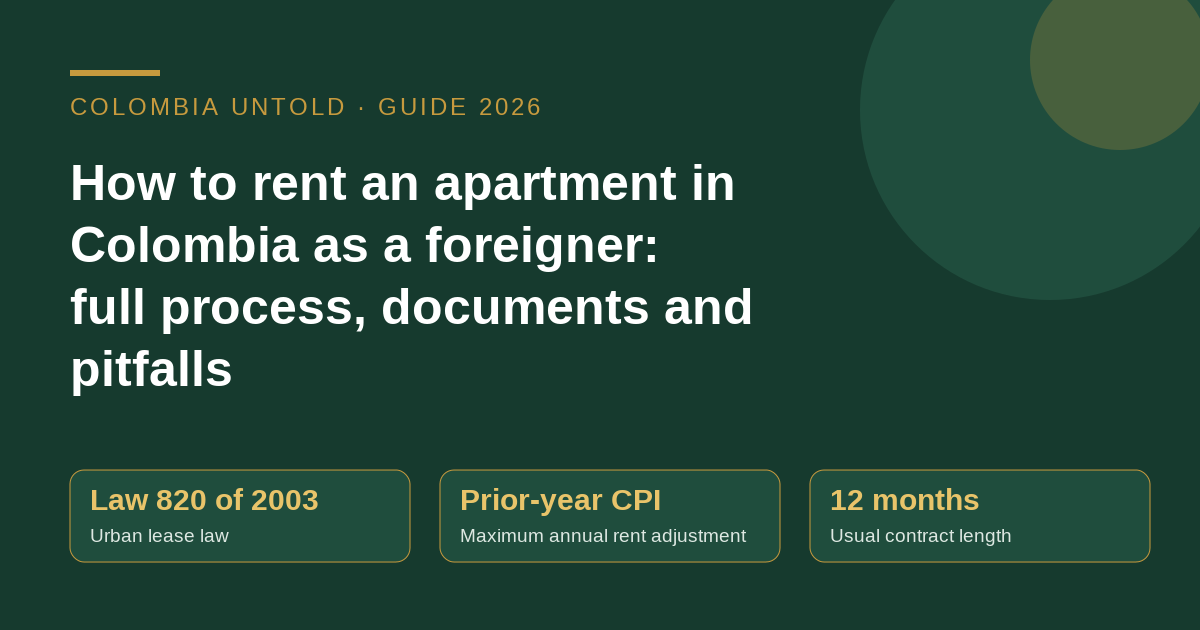
| Urban lease law | Law 820 of 2003 | Regulates the urban housing lease |
| Maximum annual rent adjustment | Prior-year CPI | Legal cap at renewal |
| Usual contract length | 12 months | With automatic renewal if no notice is given |
| Minimum wage 2026 | COP 1,750,905 | Reference to gauge affordability (rent usually weighs 30 to 40% of income) |
Official sources and reliable reading
Related guides
General information based on current rules and practice; it may change. Confirm your case with the official source or an authorized professional. Not legal, tax or medical advice.