Medellín neighbourhoods for foreigners: El Poblado, Laureles, Envigado, Belén and more, how to choose
Updated: 13 October 2026 · Colombia Untold
Quick answer: The neighbourhoods most chosen by foreigners in Medellín are El Poblado (Provenza, Manila, Astorga), Laureles-Estadio, Envigado, Sabaneta, Belén and Ciudad del Río. Choose by budget, noise, closeness to the metro, social life and your work; Medellín has a mild climate of 22 to 28 °C and a metro that structures mobility.
Medellín has become Colombia’s most visible destination for expats, digital nomads and retirees, with a mild climate that earned it the nickname “city of eternal spring”, a valley wedged between mountains, a city you can cross by metro, cable cars and tram, a constantly growing offer of coworking spaces, cafés and restaurants and a foreign community that organises around events and apps. But Medellín is not a single place: the Aburrá valley brings together several municipalities and dozens of neighbourhoods with very different realities in price, noise, safety, atmosphere and comfort. Choosing well can mean the difference between a pleasant stay and a frustrating one. This guide goes through the usual neighbourhoods, what each offers, which precautions to take and how to decide according to your profile. To go further, see Living in Medellín: expat guide, El Poblado vs. Laureles: Where Should Digital Nomads Live? and Medellín vs Bogotá for expats: how to choose.
How the city is organised
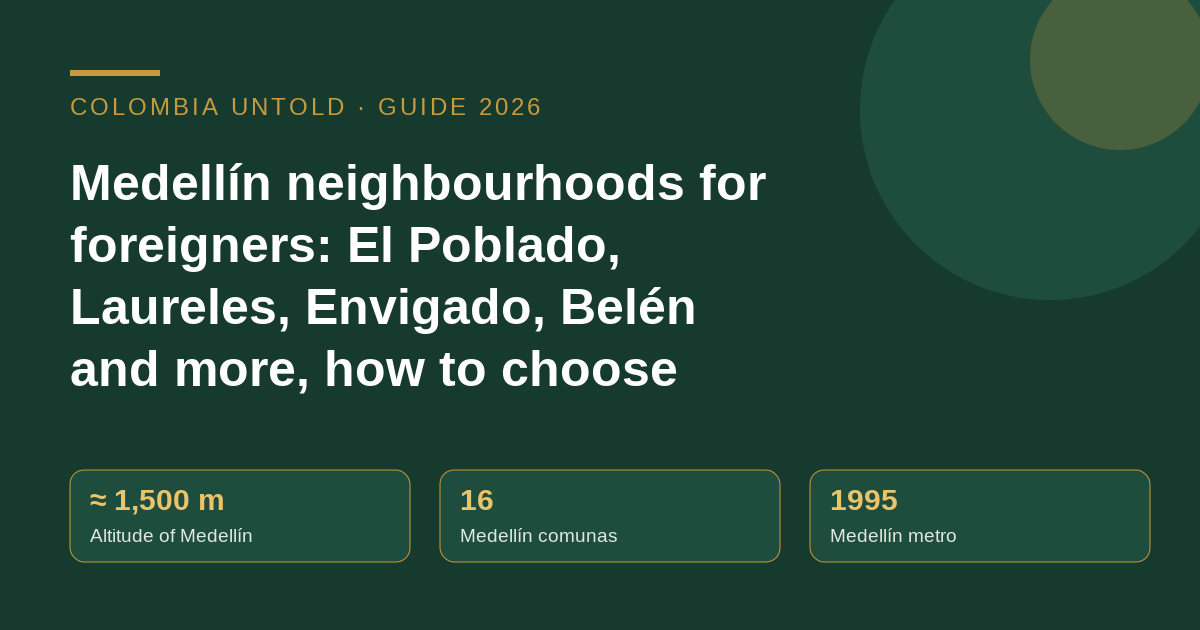
Medellín is divided into 16 urban comunas and five rural districts, with a mass-transport system led by the Metro, opened in 1995, which runs the valley north to south and east to west, complemented by the tram, the metrocables (cable cars that climb to the hillsides), Metroplús and buses. Having housing near a station is one of the most valuable criteria for daily life. El Poblado is comuna 14, Laureles-Estadio comuna 11 and Belén comuna 16, among others. The altitude is about 1,500 metres, the climate is pleasant almost all year, with daytime temperatures of 22 to 28 degrees, rain in the April-May and October-November seasons and cool nights. José María Córdova international airport is in Rionegro, about 40 to 60 minutes by road; Olaya Herrera serves domestic flights. See Medellín: Guía Completa para Visitantes 2026 (en español) for the overview of the city.
El Poblado: Provenza, Manila, Astorga and Lleras
El Poblado is the zone best known to foreigners: a wide offer of modern apartments, restaurants, bars, gyms, coworking spaces and international community, at higher costs than the rest of the city. It has distinct micro-zones: - Provenza and Manila: the gastronomic and nightlife heart, with tree-lined streets and lots of energy; very good for those who want to walk to everything, with the trade-off of noise and partying. - Parque Lleras: a very touristy bar and nightclub zone, with noise and a night-time dynamic that requires caution. Colombia severely punishes the sexual exploitation of minors, and authorities and residents are alert: respect the rules, avoid risky situations and, if you witness anything suspicious, report it to the ICBF line 141 or 123. - Astorga, Patio Bonito and Transversal Intermedia: quieter residential zones, with a good supply of buildings and services. - Ciudad del Río and Villa Carlota: more corporate settings, near offices and shopping centres. - Lalinde and Los Balsos: high zones, with houses and views, farther away and more car-dependent. El Poblado suits you if you want international community, services and social life; avoid streets near the party zones if you need rest.
Laureles and Estadio
Laureles-Estadio is nomads’ and expats’ second favourite option. It is a flat, walkable, tree-lined zone with a circular avenue (Avenida Nutibara and Carrera 70), parks, restaurants, cafés and gyms, with a residential-neighbourhood feel and more moderate prices. It is well connected by metro (Estadio and Floresta stations) and by bus. It is ideal for those who value walking and a calm daily life with services nearby; less ideal for those who want El Poblado’s international gloss. There are lively sectors, such as Calle 33 and the 70, with plenty of nightlife, and quieter ones; check the exact street. For an in-depth comparison, read El Poblado vs. Laureles: Where Should Digital Nomads Live?.
Envigado and Sabaneta
Envigado is a neighbouring municipality, with a traditional centre, residential zones such as Zúñiga, El Dorado and Las Antillas, a good supply of schools and commerce, and a more family-oriented, local life. It is an excellent option for families and people seeking tranquillity without going far. Sabaneta, further south, is a small, fast-growing municipality with new buildings, parks and somewhat more moderate prices, and good metro connection. Both are good for remote workers who want more space for less money. See Envigado and Sabaneta visitor and International schools in Medellín for expat children: options, curricula, costs and where to live for families.
Belén, Estadio and traditional zones
Belén is a broad, residential, middle-class neighbourhood with parks, commerce and moderate prices; it offers a more local and less international experience. Traditional western and central zones, such as consolidated Laureles, Calasanz or Conquistadores, offer cheap rents and neighbourhood life. The Centro, for its part, is an administrative and commercial area with a lot of daytime activity and safety and drug-use problems in certain sectors, not usual for residence. The hillsides, where the metrocables arrive, have a different social reality and enormous cultural value, best visited with local guides; see Comuna 13 Medellín: Qué Esperar y Cómo Visitarla Bien (en español).
How to decide: practical criteria
- Budget: El Poblado is usually the most expensive; Laureles, Envigado, Sabaneta and Belén offer alternatives with better price-to-space. Compare costs in Cost of living in Medellín 2026: rent, transport, food, health and a real budget for foreigners. - Noise: visit at night and at weekends; Provenza, Lleras and the 70 can be loud. - Transport: closeness to a metro station reduces time and cost; slopes and rain affect walking. See Metro de Medellín: Guía para Turistas (en español). - Safety: ask neighbours and review ¿Es Seguro Viajar a Medellín en 2026? Guía Honesta (en español) and Neighbourhood safety checklist for foreigners. Phone and bag theft is the most usual risk; avoid showing valuables. - Community and work: coworking spaces, events and exchange groups concentrate in El Poblado and Laureles; see Coworking and remote work in Medellín and Bogotá. - Climate and heat: high or well-ventilated apartments improve comfort; in the afternoon the temperature rises. - Building style: amenities, security, fibre internet and lift condition. A sensible trick: rent for a month in one zone, live there like a local and compare another zone the next month before signing a long contract; see Airbnb or long-term rental in Colombia: which suits a foreigner by time, cost and law and How to rent an apartment in Colombia as a foreigner: full process, documents and pitfalls. For furnished housing, see Cómo Conseguir Apartamento Amoblado en Medellín (Mes a Mes) (en español).
Medellín-specific care
Weather changes are quick and afternoon rain is frequent; carry an umbrella. There are seasons of poor air quality, especially between February and April and again in October, due to thermal-inversion conditions and emissions; see Air, noise and rest in Bogotá and Medellín. Check environmental-authority alerts and, if you have respiratory problems, avoid intense outdoor exercise on critical days. Ride-hailing apps and taxis are safe and cheap. Learn the rules of coexistence and avoid street offers that seem too good; see Estafas Comunes en Colombia y Cómo Evitarlas (en español) and Scopolamine (burundanga) in Colombia: a warning for foreigners.
Housing, investment and partner services
If you seek rental, purchase or investment in Medellín, Medellín Advisors and Premium Propiedades accompany you in the search, title review and purchase process; to understand the process, read Buying property in Colombia as a foreigner in 2026. For your migration status, Colombia Visa Legal; for a medical plan, CoVisas; and to travel protected, Protege Tu Viaje, with discounts of up to 65%.
How to test a Medellín neighborhood before committing
Medellín has microclimates, slopes and noise levels that differ sharply between neighboring areas, so it pays to live two or three weeks in temporary lodging before signing a long lease. Walk the hills carrying grocery bags, test the trip to the Metro at rush hour and listen to how the street sounds at eleven at night, especially on Thursdays and Fridays, when nightlife intensifies in areas such as El Poblado and Laureles.
Ask about air quality during high-pollution seasons and about how the building handles water and electricity. Talk to other foreign residents in local groups to cross-check your impressions and get references for reliable administrators and owners.
Compare at least three buildings in each neighborhood on the same criteria: elevator and backup power, security staffing, distance to groceries and pharmacies, noise from bars or traffic, and the condition of common areas. Write the scores down. Memory exaggerates the last place you saw, and a simple table prevents a charming balcony from outweighing a poorly maintained building.
Remember that rents and quality are not distributed evenly within a neighborhood. Two blocks can make the difference between a quiet residential street and a noisy corridor. Use the first month to confirm your choice and negotiate a break clause if the lease is for a year, so that you can leave with a short notice if the real experience does not match the visit. If you work from home, ask for an internet speed test inside the apartment before signing and confirm which fiber operators actually reach the building. A stable connection matters as much as location for anyone who depends on video calls, and switching providers later is often impossible when the building has an exclusive contract with only one operator.
Frequently asked questions
What is the best Medellín neighbourhood for a digital nomad?
El Poblado (Provenza, Manila) offers more community and services, with higher prices and noise; Laureles-Estadio offers a more local, walkable and affordable atmosphere. Visit both before deciding.
Is it safe to live in El Poblado and Laureles?
They are areas with a high presence of foreigners and security, but theft of phones and bags is the most usual risk. Use formal transport, do not show valuables and avoid deserted areas at night.
How much does it cost to rent in Medellín?
It depends on the zone and apartment type; El Poblado is dearer than Laureles, Envigado, Sabaneta or Belén. Compare the total cost with building fee and utilities.
Do I need a car in Medellín?
Not necessarily. The metro, cable cars, taxis and apps cover most trips. A car makes sense in high zones or if you travel often outside the city.
Which neighbourhood is best for families?
Envigado, Laureles and parts of El Poblado have a good supply of schools, parks and services. Sabaneta is a cheaper, growing alternative.
How does air quality affect life there?
There are periods of poor air quality, especially in low-rain seasons. Check alerts and avoid intense exercise on critical days.
If you are evaluating housing or investment, Medellín Advisors can guide you on search, title review and the purchase or rental process. Always hire independent legal review.
Key figures and data
| Item | Value | Note |
|---|---|---|
| Altitude of Medellín | ≈ 1,500 m | Mild climate, 22 to 28 °C by day |
| Medellín comunas | 16 | Plus rural districts; El Poblado is comuna 14 and Laureles-Estadio comuna 11 |
| Medellín metro | 1995 | Colombia’s first metro system, with lines, tram and cable cars |
| International airport | JMC in Rionegro | About 40 to 60 minutes by road |
Official sources and reliable reading
Related guides
- Everyday Spanish in Colombia: phrases, forms of address, regionalisms and a 90-day routine
- Living in Cartagena: expat guide
- Basic life insurance for expats
General information based on current rules and practice; it may change. Confirm your case with the official source or an authorized professional. Not legal, tax or medical advice.