Cartagena and the Caribbean coast for foreigners: climate, costs, neighborhoods, health and the reality beyond the postcard
Updated: 13 October 2026 · Colombia Untold
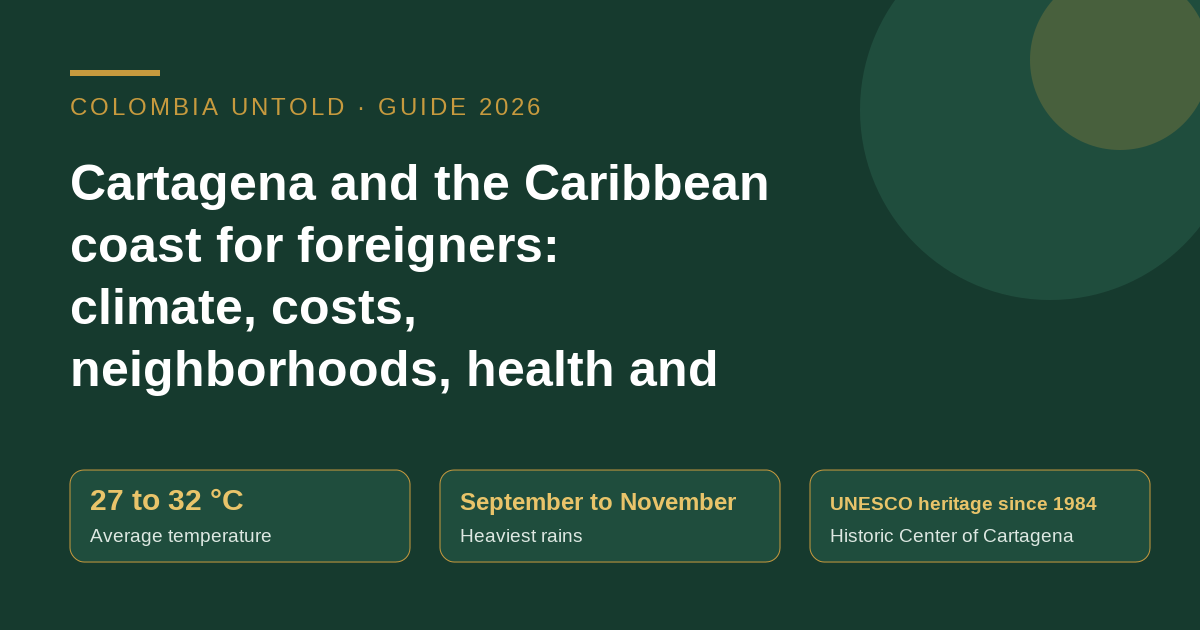
Quick answer: Living in Cartagena or on the Caribbean coast means heat and humidity all year (27 to 32 °C), a strong rainy season between September and November, flat sea-level cities and a slower, more social life. Costs vary widely by neighborhood, power and water can be irregular in some areas, dengue calls for repellent, and the yellow fever vaccine is recommended for parks such as Tayrona.
Cartagena de Indias is the most reproduced image of Colombia: colonial walls, balconies draped in bougainvillea, the Caribbean a few minutes away and a nightlife that seems endless. For many foreigners it is the first destination they consider, and also the one that clashes most with reality when they move from visiting to living. The real city has sustained heat, downpours that flood streets, costs that differ enormously between the Historic Center and working-class neighborhoods, noise, street vendors, an administration that runs on its own rhythms and a warm but demanding local population. This guide gathers what is worth knowing before moving to Cartagena or to other Caribbean-coast cities such as Santa Marta and Barranquilla, with data from IDEAM, the Ministry of Health and official tourism sources.
Climate: heat, humidity and rain
Cartagena sits at sea level with average temperatures between 27 and 32 degrees all year round, and high humidity that raises the felt temperature. There are no seasons as in the northern hemisphere: there are dry and rainy periods. From December to April dry weather prevails, with northern breezes that ease the heat; between May and November it rains more, peaking between September and November when downpours can flood low streets in the center and in neighborhoods near the lagoons. The body needs weeks to adapt. Drinking water, wearing light natural-fiber clothing, avoiding physical activity between 11 am and 3 pm and organizing the day around the heat are standard practices. Siestas and split schedules are a rational response; see Naps, heat and productivity: how to rest well while working in Colombia to organize remote work in this climate. Air conditioning is nearly indispensable at home and weighs on the electricity bill. The Caribbean hurricane season runs from June to November. Cartagena rarely takes a direct hurricane hit, but it does get rain, wind and swells linked to tropical systems. IDEAM publishes alerts and bulletins worth following during those months.
Where to live in Cartagena
The Historic Center and Getsemaní are the heritage heart: colonial streets, restaurants, bars and restored houses. They are attractive but noisy, with high rents, old buildings prone to damp and parking challenges. Bocagrande and El Laguito concentrate seafront towers, hotels and shopping; they offer comfort and services, though with heavy tourism and high prices. Manga and Pie de la Popa combine traditional character and access to the center at more moderate costs. Crespo, near the airport and the beach, offers a calmer, more local setting. To the north, Castillogrande is residential and upscale, and areas such as La Boquilla offer coastal-village life with new developments. To evaluate a neighborhood, visit at night and on different days, check water pressure, noise from nearby nightclubs, how drainage behaves in rain and the quality of internet. On contracts and guarantees in rentals for foreigners, see How to rent an apartment in Colombia as a foreigner: full process, documents and pitfalls and Renting in Colombia as a foreigner: rent, building fees, deposits and the real cost.
What living costs
Costs in Cartagena vary more than in other Colombian cities because two markets overlap: a tourist one, with dollar prices and services for visitors, and a local one. An apartment in Bocagrande, Castillogrande or the Historic Center rents for far more than in Crespo, Manga or neighborhoods outside the tourist circuit. Electricity is a major component: with air conditioning, the bill can double what is paid in a mild-climate city. Utility rates depend on the stratum, and on the coast they are generally higher than inland; ask for the last months' bills before renting. Local food, in fried snacks, fish, coconut rice and markets, is inexpensive; restaurants in the Center and tourist zones are noticeably costlier. One way to cut expenses is to eat set lunches outside the tourist circuit and buy fruit, fish and vegetables at markets such as Bazurto, taking security precautions and watching the hours. For long-term rental costs versus short stays, see Airbnb or long-term rental in Colombia: which suits a foreigner by time, cost and law.
Utilities: water, power and internet
Water supply in some sectors can be interrupted, and buildings keep reserve tanks; understanding how they work is part of coastal life. See Water, tanks and pressure in Colombian buildings: what a foreign tenant should know. Power can also be cut in certain areas and in high-demand seasons, so a backup plan for remote work, with a mobile connection as a fallback and batteries or a UPS, is reasonable; see Power cuts and remote work in Colombia: a backup plan for electricity and internet. Fiber internet is available in most central and middle- and upper-stratum neighborhoods, with speeds sufficient for video calls.
Health on the coast
Cartagena, Barranquilla and Santa Marta have private and public clinics and hospitals, with good coverage in general medicine and in surgery, orthopedics and emergency care. For complex cases, some patients move to Bogotá or Medellín. Enroll in an EPS or private insurance from the start; see Joining an EPS as a foreigner: requirements, costs and how the health system works. Dengue is endemic in Colombia's hot climates. The mosquito that transmits it bites during the day and breeds in stagnant water: use repellent, remove containers of standing water on terraces and balconies, install screens if needed and seek care for high fever with headache and joint pain. The National Institute of Health publishes case tracking. The yellow fever vaccine is recommended for those who visit areas such as Tayrona Park and the Sierra Nevada de Santa Marta, and must be given at least ten days before travel; confirm the schedule with the Ministry of Health or a vaccination center. Sun exposure is intense: use sunscreen, hydrate and avoid the middle of the day. For sea safety, respect beach flags and current warnings, and swim alone only in lifeguarded areas.
Safety and dealing with tourism
Cartagena is a tourist city with police presence in the Center and in hotel zones, but also with well-known phenomena such as insistent street selling, inflated tourist pricing and attempted scams. Always agree on a taxi price before getting in, because taxis do not use meters and fares are set by zone; distrust people who approach you in the street with tour offers and buy island trips from operators registered in the National Tourism Registry. Avoid walking alone in poorly lit areas at night, do not display valuables and withdraw money at ATMs inside establishments; see ATMs in Colombia: withdrawing cash safely, fees, limits and common scams. The emergency number is 123.
Santa Marta and Barranquilla
Santa Marta, the oldest city in Colombia, offers access to Tayrona Park, the Sierra Nevada and the Lost City, with neighborhoods such as El Rodadero, Taganga and the historic center; its pace is more relaxed and costs moderate. Inland, Minca offers cool weather and nature. Barranquilla is an industrial and cultural city, home of the Carnival, with more urban life, a main airport and costs comparable to other capitals; it is less touristy and more practical for living. Each city has its own rhythm and its own utility challenges.
Paperwork, visas and permanence
Living on the coast does not change immigration procedures, which remain national, but it does influence timing and available appointments, since many procedures are concentrated in Bogotá or regional offices. Check your visa validity well ahead and plan procedures before expiry. For children's schooling, see School calendar in Colombia: calendar A and B, enrollment, holidays and planning with children. If you need help with your immigration status, the recommended partners are Colombia Visa Legal and CoVisas.
Mobility and daily life
Cartagena is walkable in the Center, and reached by taxi or public transport in other areas, with the Transcaribe system as the backbone of mass transit. Cycling is possible in flat zones, although heat forces early starts; see Cycling and urban mobility in Colombia: bike lanes, safety and getting around without a car. Social life is more open than inland: street music, terraces, parties and neighbors who greet you. That closeness is an attraction, but it also means noise and less privacy.
A 90-day trial plan
Before buying or signing a long lease, live in the city for ninety days and repeat the experience in different seasons. Rent a furnished apartment for a short term, with a clause that allows leaving on notice. During that time, assess the heat, the noise, the quality of utilities, the real cost of electricity and how you feel in the local rhythm. Compare with Santa Marta and Barranquilla if in doubt. Only then decide whether to stay. If you plan to work remotely from the coast, prioritize buildings with a generator or backup power, a fiber connection with an alternative provider and a space with good natural ventilation. Ask neighbors which internet operator is most stable on that block, because it changes from one building to another.
Think too about how the calendar of the coast differs from the interior. Carnival in Barranquilla, the long holiday weekends, Holy Week and the December season fill hotels and beaches, raise prices and clog roads, while the rainy months leave many beach businesses quiet and rents negotiable. Many long-term residents plan their errands, repairs and trips around those cycles, renting more cheaply in the low season and leaving the busiest weeks to visitors. Learn the rhythm in your first year before making big decisions.
Frequently asked questions
Is it viable to live in Cartagena year-round without air conditioning?
It is difficult. With 27 to 32 degrees and high humidity, most foreign residents use air conditioning at least for sleeping. That is why it pays to check electricity use and stratum before renting, because the bill can double that of a mild-climate city.
When does it rain most in Cartagena?
Rains are heaviest between September and November. Downpours can flood low streets, so avoid ground-floor homes in areas with poor drainage.
Which neighborhood suits a foreigner arriving for the first time?
Manga, Crespo and Bocagrande offer a good balance of services and price. The Historic Center and Getsemaní are attractive but noisy and expensive. Visit at night before deciding.
Do I need vaccines to live on the coast?
The yellow fever vaccine is recommended if you will visit parks such as Tayrona or the Sierra Nevada and must be given at least ten days in advance. There is no general-use vaccine for dengue, so repellent and control of standing water are what count.
How do I avoid overpaying for taxis and tours?
Agree on the price before getting in, use apps or official services, and book tours with registered operators. Ask your lodging for reference fares.
Cartagena or Santa Marta to live?
Cartagena offers more services, urban life and air connections; Santa Marta, more nature and a relaxed pace. Barranquilla is the most practical and least touristy option. A trial stay in each gives the best answer.
If you want guidance on migration requirements, you can contact Colombia Visa Legal. When a procedure is online, Cancillería recommends doing it directly; professional guidance helps you understand the process, it does not replace the official source.
Key figures and data
| Item | Value | Note |
|---|---|---|
| Average temperature | 27 to 32 °C | High heat and humidity all year round |
| Heaviest rains | September to November | With floodable streets in strong downpours |
| Historic Center of Cartagena | UNESCO heritage since 1984 | Port, Fortress and Group of Monuments |
| Emergency line | 123 | Police, ambulance and fire service |
Official sources and reliable reading
Related guides
- Nequi and Daviplata for foreigners: how to open them, limits and when to use them
- Lease deposit: return
- How to find an apartment in Colombia as a foreigner: complete guide
General information based on current rules and practice; it may change. Confirm your case with the official source or an authorized professional. Not legal, tax or medical advice.