Naps, heat and productivity: how to rest well while working in Colombia
Updated: 13 October 2026 · Colombia Untold
Quick answer: A 10 to 20 minute nap taken in the early afternoon in a cool, dark place sharpens attention without ruining night sleep. In coastal heat, hydrate before and after, avoid naps longer than 30 minutes, and move demanding tasks to the early morning.
Anyone moving to Colombia from a temperate country usually discovers, around the second week, that the body is asking for something the calendar does not allow for: stopping mid-afternoon. Between lunch, the humid heat of the Caribbean and a remote-work day in front of a screen, energy falls and performance sinks. The traditional answer is the siesta, and sleep science gives it part of the credit: a short, well-done pause restores attention, mood and working memory; a badly done one leaves you groggy and ruins the night. This guide explains what happens in the body, how to take a nap that really pays off, how to adapt your schedule to each region’s climate, what Colombian working-hours rules say about breaks, and what to do when heat keeps you from sleeping well. It is general wellness information, not medical advice: if you have persistent sleep problems, consult a health professional.
Why the body asks for a nap after lunch
Sleep and wakefulness are regulated by two mechanisms working at once. The first is sleep pressure: the longer you stay awake, the more adenosine builds up, a molecule that produces drowsiness. The second is the circadian rhythm, the roughly 24-hour biological clock that raises and lowers alertness through the day. In most people there is a natural dip in the early afternoon, around 1 to 3 pm, which happens even without lunch; a heavy lunch accentuates it but is not its cause. That is why cultures in warm climates traditionally organised their day around a midday pause, and why the siesta is not laziness but a physiological adaptation. Heat adds another factor. When ambient temperature is high, the body spends energy shedding heat through vasodilation and sweat, heart rate rises a little, and mild dehydration, of just 1 to 2% of body weight, lowers attention, mood and short-term memory. In other words, working at 2 pm in Barranquilla or Santa Marta without a pause or water is not discipline: it is a recipe for mistakes.
What the evidence says about naps
Studies on naps, many of them with pilots, drivers and shift workers, agree on the basics. A 10 to 20 minute nap improves alertness, reaction time and mood, with the most noticeable effect over the next 1 to 3 hours. A classic NASA study with long-haul pilots found that a controlled nap of about 26 minutes noticeably improved performance and alertness compared with not resting. Longer naps, of 60 to 90 minutes, can support memory and creativity because they include deep and REM sleep, but they have a cost: waking in the middle of deep sleep produces sleep inertia, that sensation of grogginess and clumsiness that can last from 15 minutes to an hour. There are two important warnings. The first is timing: sleeping after 4-5 pm reduces night-time sleep pressure and can delay falling asleep at night, especially in people who already have insomnia. The second is regularity: a daily nap at the same time fits into the biological rhythm; a chaotic nap disrupts it. If you sleep badly at night, the nap is not the solution: it is a symptom that deserves attention. And if you need it every day despite sleeping seven to nine hours, or you fall asleep involuntarily in unsafe situations, see a doctor. Types of nap and what they are for - Micro-nap (5 to 10 minutes): eases mild drowsiness; useful in the office, the coworking space or on transport. - Short nap (15 to 20 minutes): the sweet spot for most people; avoids deep sleep and you wake clear-headed. - Coffee nap (coffee just before a 15 to 20 minute nap): caffeine takes about 20 to 30 minutes to act, so it kicks in as you wake; it works for many people but not for those who sleep poorly or are caffeine-sensitive. - Long nap (60 to 90 minutes): completes a cycle; suitable when you have slept little, but better early in the afternoon.
How to take a nap that pays off, step by step
- Choose the moment: between 1 and 3 pm is almost always ideal; avoid sleeping late in the afternoon.
- Set an alarm for 20 to 25 minutes, to include the time it takes to fall asleep, and do not snooze it.
- Find a cool, dark and quiet place: blinds, an eye mask and earplugs help. On the coast, a fan or air conditioning at 24-26 °C, never aimed directly at the body.
- Hydrate beforehand: a glass of water, not so much that you wake needing the bathroom.
- Avoid screens in the ten minutes before: light and notifications delay sleep.
- On waking, expose your eyes to natural light, walk and drink water; in two to five minutes the fog lifts.
- Resume with a simple task and leave the complex one for a few minutes later.
Heat, humidity and sleep: what changes by region
Colombia does not have a single climate: it has thermal floors, and the logic of the nap changes with each. Caribbean coast (Barranquilla, Cartagena, Santa Marta, Valledupar): temperatures of 28 to 35 °C, high humidity and an even higher heat index. Here the midday pause makes real sense. Concentrate demanding cognitive work between 6 and 11 am, take the pause between 12:30 and 2:30 pm and resume in the afternoon, when temperatures drop. Hydration is mandatory: cool water, oral rehydration solution on heavy sweating days and no alcohol at lunch. See our guide on Caribbean coast: heat and hydration. Warm valleys (Cali, Villavicencio, Neiva, Girardot): hot days, dry or semi-humid. A similar scheme works, with a short midday pause and cross-ventilation at home. Temperate land (Medellín, Coffee Region): temperatures of 22 to 28 °C. Heat is rarely a problem; the nap answers the lunch dip more than the climate. A 15 to 20 minute pause is enough. Cold land and altitude (Bogotá, Tunja, Pasto): lower temperatures and less available oxygen; some newcomers sleep worse and feel more tired from altitude. A short nap helps, but the key lies in hydration, night sleep and gradual acclimatisation. See Altitude and sleep in Bogotá and Hydration at Bogotá altitude.
Sleeping well at night when it is hot
The body needs to lower its core temperature to fall asleep, and hot nights prevent it. General sleep guidelines put the ideal bedroom temperature between 16 and 19 °C, a range hard to reach on the coast, so the realistic goal is to get closer. Strategies that work: a fan or scheduled air conditioning, cotton or linen sheets, blinds that block solar heat during the day, a lukewarm rather than cold shower before bed, and avoiding alcohol and heavy meals at night. Without air conditioning, cross-ventilation, damp towels at the window and a fan with a bowl of ice in front can help. Follow our general guidelines in Sleep hygiene for expats.
Working hours, breaks and rights in Colombia
If you work for an employer in Colombia, it is useful to know that the legal maximum working week has been reduced under Law 2101 of 2021: it fell gradually from 48 to 47 hours per week in 2023, 46 in 2024, 44 in 2025 and 42 hours from 15 July 2026, without a pay cut. The week is generally distributed Monday to Saturday or Monday to Friday by agreement, and there is no specific legal right to a siesta, although the employer must provide breaks within the working day, and in jobs exposed to high temperatures occupational health and safety rules require preventive measures such as hydration, pauses and suitable clothing. In practice, many coastal companies adapt schedules with continuous days and longer midday breaks. If you are a digital nomad or freelancer, your schedule is yours, and that is precisely where the nap can become an advantage. A typical coastal scheme: deep work from 6:30 to 11:30 am, light lunch, a pause from 12:30 to 2 pm with a short nap and gentle exercise, and a block of meetings and admin from 2:30 to 6 pm. If you work with teams in other time zones, see Time zones and remote work from Colombia and Notification limits in remote work to protect your rest.
Common nap mistakes
- Sleeping too long: over 30 minutes unplanned causes grogginess and can take away night sleep.
- Sleeping late: after 4-5 pm the nap interferes with night sleep.
- Using the nap to compensate for chronic sleep loss: it supports but does not replace.
- Doing it on a very full stomach or with alcohol: a heavy lunch and alcohol increase drowsiness and worsen sleep quality.
- Not hydrating: in heat, sleeping for hours without drinking water can leave you with a headache.
- Screens in bed: delays sleep onset and lengthens the nap without you noticing.
Other ways to recover energy if you cannot sleep
Not everyone can or wants to nap. There are alternatives with reasonable support: a 10-minute walk outdoors, preferably in the shade; a few minutes of slow breathing with eyes closed, which reduce arousal and can give a sense of rest; natural light, which adjusts the biological clock; and a light snack with protein and fibre rather than sugar, which causes energy spikes and crashes. Watch caffeine: coffee after 2-3 pm can interfere with night sleep in sensitive people; see Coffee and caffeine at altitude. Gentle exercise such as yoga or stretching also helps relieve the tension of seated work; see Movement and coworking: protecting your back in Colombia and Laptop posture at home.
Heat and warning signs
Telling normal tiredness from heat stroke is important. Warning signs: very high body temperature, red and dry skin or, on the contrary, cold sweat; intense dizziness, confusion, strong headache, nausea or vomiting, very rapid pulse or fainting. If it happens, move the person to a cool place, remove excess clothing, apply cool cloths and call the emergency line 123 immediately. Older adults, children, people with chronic illnesses and those taking certain medicines are more vulnerable. For other useful numbers, see Emergency numbers.
Health insurance and access to care
If you live temporarily on the coast and work outdoors or play sport, it is worth having medical cover, including emergency care for dehydration or heat stroke. If you are visiting, you can quote travel insurance with discounts of up to 65% at Protege Tu Viaje, and if you need a medical plan that meets visa requirements, CoVisas Colombia can guide you. To understand how the health system works, see Pharmacy and emergencies for foreigners.
A nap plan for your first two weeks
Week 1: do not force it. Observe when your energy falls and note it; sleep seven to nine hours at night and avoid late coffee. Week 2: introduce a 15 to 20 minute pause at the same time each day, with an alarm, in a cool place. Assess whether you wake clear or groggy and adjust the length. If after two weeks your night sleep got worse, delay or drop the nap. That logic of observe, test and adjust is more useful than any universal rule.
Frequently asked questions
How long should a nap be to be productive without leaving me groggy?
Between 10 and 20 minutes is the safest range for most people. It avoids deep sleep, so waking is easy. If you exceed 30 minutes without completing a 90-minute cycle, you will likely feel sleep inertia, with grogginess that can last up to an hour.
Can a nap harm my night’s sleep?
It can if it is long or late. A nap after 4-5 pm, or longer than 30 minutes, reduces sleep pressure and delays falling asleep. If you already have insomnia, limit or drop it and consult a professional.
Is it normal to feel so tired in the coast’s heat?
Yes. Heat forces the body to spend energy shedding heat and increases fluid loss; even mild dehydration lowers attention and mood. Full acclimatisation to heat can take one to two weeks. Hydrating, moving demanding work to the morning and resting at midday speeds up the process.
Do I have a legal right to a nap at work in Colombia?
There is no specific legal right to a siesta. There are working-hour limits (42 hours a week from 15 July 2026 under Law 2101 of 2021), breaks and employer obligations in occupational safety and health, which include preventing heat risks. What is agreed about pauses depends on the contract and company policy.
Does drinking coffee before a nap work?
In many people, yes. Caffeine takes about 20 to 30 minutes to take effect, so a 15 to 20 minute nap right after coffee can wake you more clear-headed. It is not suitable for those who sleep badly, have anxiety or poorly controlled hypertension, nor after 2-3 pm.
What do I do if I cannot sleep in the heat at night?
Lower the bedroom temperature with ventilation or air conditioning, use light bedding, take a lukewarm shower before bed, avoid alcohol and heavy meals and keep a fixed schedule. If insomnia lasts more than a few weeks, see a doctor.
If you need a medical plan or travel insurance for your visa or stay, CoVisas Colombia can guide you on plans that meet Resolution 5477. Always compare the coverages in writing.
Key figures and data
| Item | Value | Note |
|---|---|---|
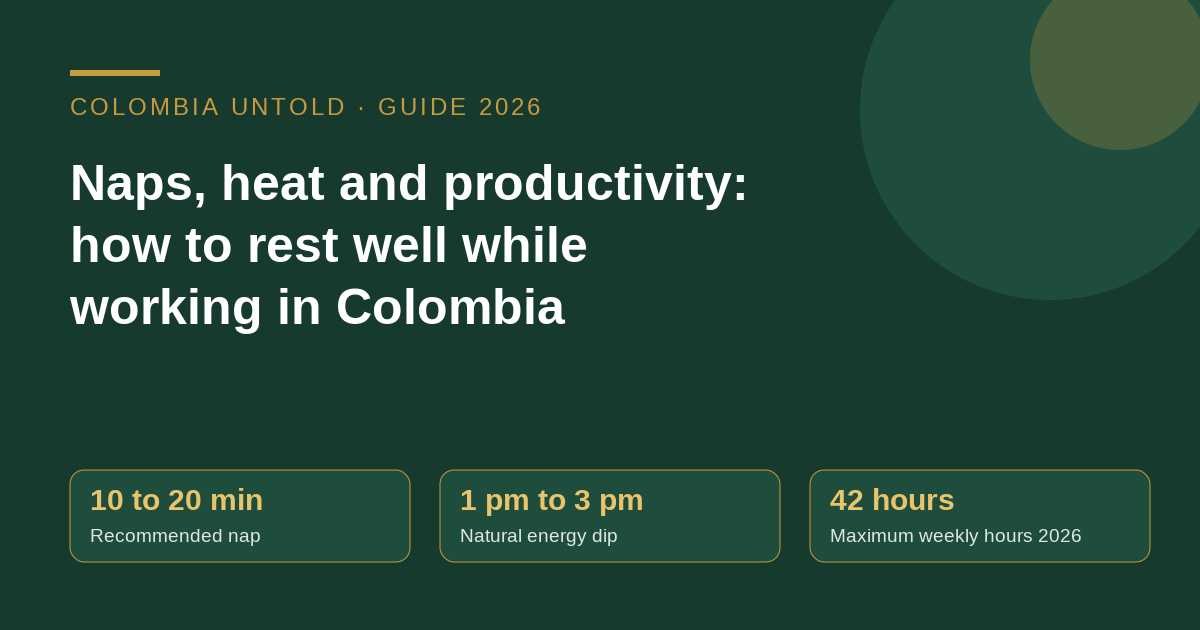
| Recommended nap | 10 to 20 min | Beyond 30 minutes sleep inertia increases |
| Natural energy dip | 1 pm to 3 pm | Matches the post-lunch dip of the circadian rhythm |
| Maximum weekly hours 2026 | 42 hours | Law 2101 of 2021, in force since 15 July 2026 |
| Ideal sleeping temperature | 16 to 19 °C | Usual recommended bedroom range |
Official sources and reliable reading
Related guides
General information based on current rules and practice; it may change. Confirm your case with the official source or an authorized professional. Not legal, tax or medical advice.