Colombia news today: what foreigners need to know
By Francisco Viloria · Updated: 13 October 2026
Quick answer: Foreigners in Colombia should watch four fronts above all: immigration and visa changes, economy and taxes, security and housing. Always confirm each change with official sources such as the Foreign Ministry, Migración Colombia, the DIAN and the Banco de la República.
News from Colombia can affect your visa, taxes, housing, budget or safety, and for a foreigner the challenge is not a lack of information but too much of it: alarmist headlines, chain messages, social media rumors and undated articles circulating as if they were current. This page does not try to be a newscast, which would be outdated within days. It is a guide to understanding which topics are worth following, where to confirm them, what the yearly calendar of changes looks like and how to tell a rule in force from a proposal. It also includes the reference data we currently use on the site and links to our News guides. It does not replace the official source: before acting, verify the date and the original text.
The four fronts to watch
Anyone living or investing in Colombia is usually affected by four kinds of news. The first is immigration: visas, deadlines, procedures and documents. The second is economic and tax-related: minimum wage, inflation, exchange rate, taxes and the exchange regime. The third is housing and investment: leases, property tax, foreign investment registration and the real estate market. The fourth is safety and daily life: scams, alerts, strikes, holidays and road closures. If you organize your follow-up by fronts instead of reading everything, you save time and do not miss what matters.
Immigration and visas: the most sensitive front
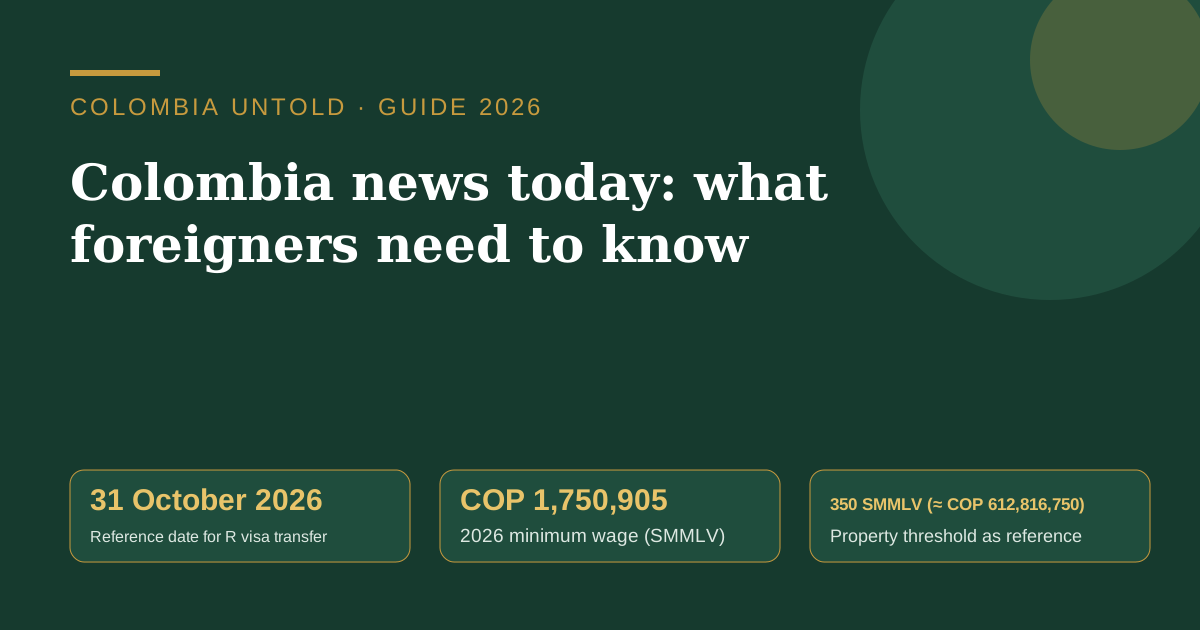
It is the one that costs most when ignored. Colombian visas are grouped into visitor (V), migrant (M) and resident (R) categories, regulated by Resolution 5477 of 2022 of the Ministry of Foreign Affairs. The Foreign Ministry has reported a deadline of 31 October 2026 for certain holders of resident visas issued under earlier rules to complete the transfer procedure. Deadlines can be modified by later decisions, so confirm the current status in the official statement and do not rely on third-party summaries. If you are in that group, the priority is to check your case today, not on the last day. Read Foreigner ID card and R transfer 2026, Colombia resident visa transfer 2026 and Colombia visa changes 2026: map for expats, investors and retirees.
Other immigration developments to follow
Beyond the transfer, it is wise to follow renewal requirements and resolution times (Colombia visa renewal: timelines and documents), conditions for digital nomads (Digital nomads Colombia 2026), investment visas and their thresholds (Colombia investor visa 2026) and changes in the foreigners' registry and the foreigner ID card. Visas often express economic requirements in minimum wages, so an annual wage update changes the peso amounts without the rule changing. If you are preparing a procedure, check the current official list for your category and do not rely on figures from previous years.
Minimum wage, UVT and the yearly calendar of changes
Several figures are updated every year and are worth anticipating. The monthly legal minimum wage (SMMLV) is set by the Government, normally toward the end of the prior year; for 2026 it is COP 1,750,905, so, as a reference, three SMMLV equal COP 5,252,715 and 350 SMMLV equal COP 612,816,750. The DIAN updates the Tax Value Unit (UVT), which is the basis for tax thresholds and penalties. Holidays are set by law, and individuals' income tax returns follow an annual calendar published by the Government. Knowing these dates repeat lets you schedule reviews instead of finding out late through a news item.
Economy: inflation, interest rates and the exchange rate
Inflation, the Banco de la República's rate policy and the exchange rate affect your peso budget, the cost of financing a purchase and the value of your income if you are paid in another currency. For official data, consult DANE (inflation and employment) and the Banco de la República (rates, exchange rate and monetary policy reports). Avoid deciding on a single data point: one month's inflation can differ from the annual average, and the exchange rate is volatile. If you are paid in dollars or euros, it is sensible to keep a peso cushion to absorb variations. To see how this translates into your budget, read Cost of Living in Medellín 2026: Complete Breakdown and Sending money to Colombia: fees.
Taxes and tax residence
Tax residence, income tax returns, wealth and the exchange regime can affect foreigners with income or investments. Tax residence generally depends on time spent in the country and other criteria set by tax law; it does not necessarily coincide with your immigration status. Consult the DIAN and an accountant before making decisions, and read Basic taxes for foreigners in Colombia, Tax residency certificate and The 4x1000 Tax in Colombia: What It Is and What It Means for You. Tax changes are usually debated in Congress for months before approval, so a proposal is not a rule in force.
Housing and real estate investment
Rental rules, property tax, notary and registration costs and foreign investment rules change over time. Real estate investment thresholds for visas are expressed in SMMLV, so they update with the wage. If you plan to buy in Medellín, Medellín Advisors and Premium Propiedades can help you review areas, titles and property conditions. To understand the process, read Buying property in Colombia as a foreigner in 2026 and, if you rent, How to find an apartment in Colombia as a foreigner: complete guide.
Safety and alerts
Scams and security alerts change by city and season. A widely discussed case is that of drugs used to subdue victims, sometimes through dating apps; see Scopolamine (burundanga) in Colombia: a warning for foreigners, Personal safety for foreigners in Colombia and Safety in Colombia: what expats should know in 2026. For official alerts, consult the National Police and your government's travel advisories. Remember 123 for emergencies.
Transport, holidays and daily life
Colombia has many public holidays and several fall on Mondays, which creates long weekends with heavy movement and mass travel. Strikes, blockades, roadworks and bad weather can affect roads and flights. Plan ahead if you have a procedure or trip on long-weekend dates, and check the calendar in Public holidays in Colombia: operational calendar for foreigners. Some offices do not serve on holidays, which can affect immigration deadlines if you leave things for the last day.
Politics and changes of government
Changes of government and the makeup of Congress influence the regulatory agenda: tax, labor, health or pension reforms may be debated and modified. A new presidential term began on 7 August 2026, and it is normal for new priorities and bills to appear. For a foreigner, the key is to distinguish between a bill in process, a law approved but pending regulation and a rule already in force, because only the last produces immediate effects. Follow the official information from Congress and the ministries.
How to read a news item without falling for alarms
Identify the source, the date and whether it concerns a proposal or a rule in force. Find the original document, such as a resolution, decree, law or statement, and read the text before the headline. Compare two or three quality outlets and distrust headlines without an official link, undated screenshots and chain messages. Ask whom it really affects: a rule about a visa you do not hold may not matter to you. And if something requires action, note the deadline and the procedure.
Where to get reliable information
For immigration: the Foreign Ministry and Migración Colombia. For taxes: the DIAN. For the economy: the Banco de la República and DANE. For general news, outlets with a recognized track record and international agencies such as Reuters. For safety: the National Police and official travel advisories. For local matters in your city, city halls. Complement with expat communities, but treat their comments as leads, not sources.
A simple habit: the monthly review
Set aside thirty minutes a month to review Foreign Ministry and Migración Colombia statements, note upcoming expirations of your visa, ID card or passport, check the tax calendar if you have obligations and review your budget against the exchange rate. Before any major procedure, repeat the review. With that habit, news stops being a source of anxiety and becomes a planning tool.
Glossary of acronyms for reading the news
Cancillería is the Ministry of Foreign Affairs, which administers visa procedures. Migración Colombia is the authority that controls entry, stay and registration of foreigners and issues the foreigner ID card. The DIAN is the tax and customs authority. DANE produces official statistics such as inflation and employment. The Banco de la República is the central bank, which sets monetary policy and administers the exchange regime. The Superintendencia Financiera supervises banks and insurers, and the Superintendencia de Industria y Comercio protects consumers and personal data. SMMLV is the monthly legal minimum wage; UVT, the tax value unit; and EPS, the health promotion entity. Knowing these acronyms lets you tell who each news item concerns and where to find the original text.
What to do when a news item does affect you
First, do not panic or act in a hurry. Second, open the official source, read the text and note dates, requirements and whom it applies to. Third, compare it with your specific situation: your visa category, your expiry date, your income and your tax residence. Fourth, if you need to act, define the procedure, gather the documents and set an internal date before the official deadline. Fifth, if in doubt, consult a professional in the area, whether an immigration lawyer, an accountant or a financial adviser. Finally, keep a copy of the rule and of the receipts for whatever you do, because they may be useful in the future.
Our analysis
For a foreigner, most important news is regulatory and comes with a deadline. The items that cost most when ignored are immigration expirations and threshold changes. The most practical approach is to build a habit: a monthly review of the Foreign Ministry and Migración Colombia, and targeted advice when a change affects you. Colombia Visa Legal can guide you on immigration matters, CoVisas on visa-related insurance and Protege Tu Viaje on travel coverage. Also see our News guides for changes explained calmly.
Frequently asked questions
Where do I see official immigration changes?
On the Foreign Ministry and Migración Colombia websites. Always look for the original statement or resolution.
What is the date for the resident visa transfer?
The Foreign Ministry reported 31 October 2026 as the deadline for certain holders of resident visas issued under earlier rules.
Why do visa amounts change?
Many are expressed in minimum wages (SMMLV), which are updated every year; for 2026 the SMMLV is COP 1,750,905.
How often should I check the news?
Once a month is reasonable, and always before starting an important procedure.
How do I know whether a news item is reliable?
Identify the source and date, find the official document and distinguish between a proposal and a rule in force.
Does a change of government alter my visa?
Not automatically. Rules only change when a new rule or resolution is issued; follow official statements.
Which official sources should I follow for immigration news?
Migración Colombia, the Cancillería and the Diario Oficial publish regulatory changes. Use them as your main reference.
Where are resolutions and decrees published?
In the Diario Oficial and on the websites of the issuing agencies. Always check the date and validity.
What is the Diario Oficial?
It is Colombia's official publication for laws, decrees and resolutions.
How do I tell a bill from a law in force?
A bill is still moving through Congress; a law applies only once signed and published. News about a bill does not change your obligations.
Does the minimum wage affect foreigners?
Yes, because several visa and tax thresholds are expressed in minimum wages. For 2026 the SMMLV is COP 1,750,905.
What happens to visas already granted if rules change?
The rule normally sets transition provisions.
How do I avoid fake news about Colombia?
Cross-check official sources and recognized outlets, and distrust viral messages without a source or date.
How do I know if a security alert is real?
Avoid sharing unverified rumors.
Where can I see my country's travel alerts?
On your country's foreign ministry website. Many offer traveler registration.
When does the government change in Colombia?
The 2026–2030 presidential term began on 7 August 2026. Policies may evolve during the term.
How does the exchange rate affect my finances?
If you earn in foreign currency, peso fluctuations change your local purchasing power.
What is the TRM?
The Tasa Representativa del Mercado is the officially calculated and published peso-dollar exchange rate. It is used as a reference in many procedures.
What should I do during a strike or road blockade?
Avoid tension zones.
How often do procedures change?
Irregularly.
Where do I get help if I do not understand a news item?
From the competent agency, a lawyer or foreigner-services advisers, depending on the topic.
What is Migración Colombia?
It is the country's immigration authority: it controls the entry and stay of foreigners, issues the cédula de extranjería and registers visas.
What is the Cancillería?
It is the Ministry of Foreign Affairs, which grants visas, apostilles documents and directs foreign policy.
What is Congress and how does it affect foreigners?
It is the legislative body that passes laws, including tax and investment laws that can affect foreign residents.
What is a decree?
It is a rule issued by the Government that regulates laws and may change immigration and tax procedures.
What is a resolution?
It is an administrative act by an agency, such as the Cancillería or the DIAN, that sets requirements, fees and procedures.
What is the Constitutional Court?
It is the court that reviews whether laws respect the Constitution and can strike down rules that contradict it.
How are peso amounts adjusted each year?
Many values are expressed in minimum wages or UVT, so they change when those references are updated each year.
What is an emergency decree?
It is an exceptional rule the Government may issue in extraordinary situations, with later review by the Constitutional Court.
What media cover Colombian news in English?
Besides national outlets with English sections, international press covers Colombia regularly.
How do I stay informed as a foreigner?
By following Migración Colombia and Cancillería announcements, newsletters from recognized media and this site's updated guides.
If you want guidance on migration requirements, you can contact Colombia Visa Legal. When a procedure is online, Cancillería recommends doing it directly; professional guidance helps you understand the process, it does not replace the official source.
Key figures and data
| Item | Value | Note |
|---|---|---|
| Reference date for R visa transfer | 31 October 2026 | Indicated by the Foreign Ministry; confirm current status |
| 2026 minimum wage (SMMLV) | COP 1,750,905 | Basis for visa thresholds expressed in SMMLV |
| Property threshold as reference | 350 SMMLV (≈ COP 612,816,750) | Confirm the current value before deciding |
| Visa framework | Resolution 5477 of 2022 | Categories V, M and R |
Official sources and reliable reading
Related guides
- What competitive advantages does Colombia have over other Latin American countries?
- What are Colombia's main trade agreements? FTAs with the US, European Union, Canada, Mexico, the UK and South Korea
- Is Colombia a good place to retire? Advantages, costs, visa and risks for foreigners
General information based on current rules and practice; it may change. Confirm your case with the official source or an authorized professional. Not legal, tax or medical advice.