Cooking classes in Colombia: regional dishes, markets, ingredients and culture through food
Updated: 13 October 2026 · Colombia Untold
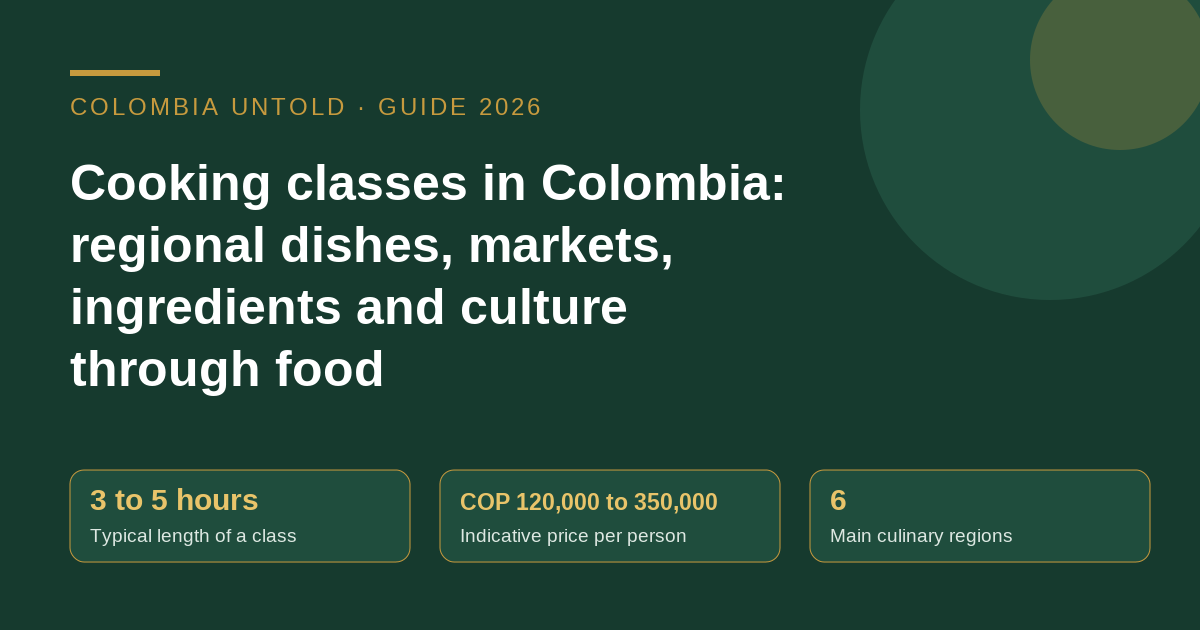
Quick answer: Cooking classes in Colombia combine a market visit, tropical ingredients and regional dishes such as ajiaco, bandeja paisa, sancocho, arepas and coconut rice. They usually last three to five hours, cost between COP 120,000 and 350,000 per person depending on city and format, and are an excellent way to learn the culture, practice Spanish and make friends. Choose operators with regulated food handling and declare allergies.
Colombia is better understood from the kitchen than from any map. Each region tells a different story through its ingredients: Bogotá's three-potato ajiaco with guascas herb, the bandeja paisa of beans and crackling, the coastal sancocho, Cartagena's coconut rice, Tolima's tamales, Pacific fish and Amazon fruits that exist in no foreign supermarket. A cooking class turns that diversity into a practical, social and tasty experience. This guide explains the types of classes, the most interesting dishes and markets, what they cost, how to choose a safe operator, how to handle allergies and how to use cooking to integrate.
Why a cooking class is a good cultural investment
Food concentrates history, geography and daily life. Learning to prepare a Colombian dish forces you to know the ingredients, understand where they come from and listen to the teacher talk about how people eat at home and in their region. Unlike a museum, you are doing and eating, which fixes the learning. For someone in the first weeks of the process described in Culture shock in Colombia: stages, customs, social etiquette and how to integrate without losing your identity, a cooking class also offers a structured, low-risk social situation: everyone has the same task, there is natural conversation and the result is shared. It also has a practical benefit. Eating at home with local ingredients cuts costs compared with eating out every day, and knowing the fruits, herbs and cuts of meat available makes your shopping smarter.
The dishes worth learning
Ajiaco santafereño. A thick Bogotá soup with three types of potato, chicken, corn on the cob and the guasca herb, served with cream, capers and avocado. It is perfect for the capital's cold weather. Bandeja paisa. A hearty Antioquia platter with beans, rice, ground beef, crackling, chorizo, fried egg, ripe plantain, arepa and avocado. It is more a ritual than a lunch. Sancocho. A broth from the coast and the interior with meat or fish, plantain, cassava and potato. Every region and every family has its recipe. Arepas. Made of corn, with cheese, stuffed or with egg, they are the daily bread. Making an arepa with the right texture takes practice and humor. Coconut rice and fried fish. A Cartagena classic with patacones and salad. The coconut is grated and squeezed to obtain the base milk. Tamales, empanadas and fried snacks. Celebration and street dishes with regional variants. Tolima and Valle tamales are wrapped in plantain leaf. Desserts and drinks. Arequipe, figs with cheese, natas, coffee, Bogotá-style chocolate with cheese, aguapanela and fruit juices. A single-origin coffee prepared with different methods is a class in itself; look at the offerings from the growers and farms of the Coffee Region.
Fruits, herbs and markets
Colombia has one of the greatest diversities of fruit in the world: lulo, passion fruit, soursop, granadilla, curuba, mamoncillo, sapote, borojó, dragon fruit, cape gooseberry and many more. Market squares are the best classroom: Paloquemao market in Bogotá, the Minorista José María Villa market in Medellín, Bazurto market in Cartagena and Galería Alameda in Cali are places where you learn more in an hour than from a book. Classes that include a market visit teach you to choose produce, to bargain politely and to meet vendors. Carry moderate cash, keep your belongings safe and wear comfortable shoes; see ATMs in Colombia: withdrawing cash safely, fees, limits and common scams for safe money handling.
Types of classes and what to expect
Group class with a regional menu. Six to twelve people prepare three or four dishes with a chef and eat together at the end. It is the most social and cheapest option. Private or at-home class. A local cook teaches you in a home kitchen, with a more intimate and personalized experience at a higher cost. Food tour with a class. Combines a tour of markets or neighborhoods with a cooking session. Coffee and cacao experiences. Farms in the Coffee Region and the Sierra Nevada offer workshops on coffee and cacao processing, with tastings. Multi-week courses. Culinary schools and cultural centers offer Colombian cooking or general technique courses with a longer commitment and greater depth.
What they cost
As a rough guide, a group class of three to five hours with food included usually costs between COP 120,000 and 350,000 per person, depending on the city, chef and menu. Private classes and farm experiences cost more. Multi-week courses are priced by program. Ask what the price includes: ingredients, drinks, recipe booklet, transfers and tip. Compare reviews and request the menu in advance.
How to choose a safe operator
Check that the cooking space is clean and organized, that staff wear aprons and hair coverings and that surfaces and utensils are in good condition. Colombia regulates food handling through Resolution 2674 of 2013 of the Ministry of Health, which requires good practices, and INVIMA oversees food safety. A serious operator can explain how it stores and handles ingredients. Ask about liability insurance, the maximum number of participants and the cancellation policy. Report your allergies and intolerances in advance, such as nuts, shellfish, gluten or dairy, and your diet preferences. Colombian cuisine uses corn, cassava and plantain as bases, which are naturally gluten-free in many dishes, but there is cross-contamination and sauces with hidden ingredients. An allergic person should confirm the ingredients of every step with the chef before starting. Bring your emergency medication if relevant and check your health coverage; see Joining an EPS as a foreigner: requirements, costs and how the health system works. In an emergency, call 123.
What you learn besides recipes
A good class teaches culinary vocabulary in Spanish (sofrito, guiso, hogao, adobo, sudado, guisado), slow-cooking techniques and seasoning with few ingredients, and the uses of condiments such as cumin, cilantro and chili. It also teaches social customs: how lunch is served, how the plate is shared and why Sunday lunch is sacred. Those details are what let you understand invitations to Colombian homes and behave naturally. Many foreigners end up cooking for their neighbors and colleagues, which closes the integration circle. Combine it with the dance classes described in Dance classes in Colombia: salsa, bachata, vallenato and how to build your social network by dancing to alternate body and conversation.
Cooking at home with local ingredients
When you go back to your own kitchen, apply what you learned. Shop at market squares or neighborhood stores for seasonal fruit and vegetables at a good price. Learn local cuts of meat and the names of ingredients in Spanish. Keep a basic pantry with rice, beans, plantain, corn for arepas, oil, salt, cumin, garlic and onion. Check the conditions in your home: some Colombian kitchens are small and run on natural gas or gas cylinders; see Utilities and public services when renting in Colombia to understand gas and utilities. For water quality in the kitchen, see Water, tanks and pressure in Colombian buildings: what a foreign tenant should know.
Cooking and daily life in the cities
In Bogotá, classes are concentrated in Chapinero, La Candelaria and Usaquén, with emphasis on ajiaco, tamales and chocolate. In Medellín, El Poblado and Laureles offer classes in paisa food, arepas and coffee. In Cartagena and on the coast, Caribbean cuisine of seafood, coconut and fried foods is the protagonist; see Cartagena and the Caribbean coast for foreigners: climate, costs, neighborhoods, health and the reality beyond the postcard. In the Coffee Region, farms combine coffee, typical food and landscape. In Cali and the Pacific, Afro-Colombian cuisine offers unique flavors, such as encocado and fish sancocho.
Frequent mistakes
Booking without reading what the price includes. Not warning about allergies. Taking photos without paying attention to the process and losing the learning. Expecting the recipe to turn out the same at home without finding the ingredients. Not asking about the origin of ingredients. Leaving too small a tip when service was excellent. Becoming a food tourist without practicing later at home.
A three-class plan
Choose a market experience and regional dish in your city, a coffee or cacao one and one on coastal or other-region cooking. Do one a month and practice the dishes at home. Invite a neighbor or colleague to taste them. In three months, you will have a repertoire of five dishes, new bonds and better kitchen Spanish.
How to prepare for your first class
Arrive with your stomach half full, wear comfortable clothes that can get stained, tie back your hair and bring a notebook to jot down vocabulary. Ask in advance whether the operator can adapt the spice level, since many Colombian sauces use chili in mild amounts, but some coastal versions are stronger. At the end, thank the team with a tip and share your photos tagging the operator: it is the best advertising for local businesses.
Think about the logistics, too. Check the meeting point, which may be a market entrance rather than the kitchen, confirm the start time and the walking distance, and plan transport home, because classes that finish in the late afternoon in big cities may overlap with rush hour. If you are traveling with a partner or children, ask whether the class admits minors, whether there are child-friendly tasks and whether the operator offers a smaller private format.
Lastly, think about what you want from the experience. If your goal is cultural immersion, prioritize classes with market visits and conversation with the cook about family traditions. If your goal is practical cooking skills, prefer small groups with more hands-on time. If your goal is to make friends, choose a recurring weekly course rather than a one-off tourist activity: repeated meetings with the same people are what turn a pleasant afternoon into a durable friendship.
Frequently asked questions
Do I need to know how to cook to take a class?
No. Classes are designed for all levels, and many attendees are beginners. The chef guides every step and adapts the difficulty.
Can I take the class if I am vegetarian or vegan?
Yes, if you tell them in advance. Many operators offer vegetarian menus with arepas, beans, plantain, cassava and fruit, although traditional dishes usually include meat.
How much should I expect to pay?
Between COP 120,000 and 350,000 per person for a group class with food, depending on the city and format. Private and farm classes cost more.
What do I do if I have a severe allergy?
Tell the operator when booking and again at the start, confirm the ingredients of each step, bring your medication and avoid classes with foods you cannot control. In an emergency call 123.
Can I take the recipes home?
Most operators send the recipe booklet by email or give a printed copy. Ask before booking.
Do the classes help me practice Spanish?
Yes. Instructions are oral and practical, with culinary vocabulary and natural conversation, which helps the ear and expression.
Key figures and data
| Item | Value | Note |
|---|---|---|
| Typical length of a class | 3 to 5 hours | Includes a market visit in many formats |
| Indicative price per person | COP 120,000 to 350,000 | Depending on city, group and menu |
| Main culinary regions | 6 | Caribbean, Andean, Pacific, Orinoquía, Amazon and insular |
| Allergens to declare | Before booking | Nuts, shellfish, gluten and dairy |
Official sources and reliable reading
Related guides
General information based on current rules and practice; it may change. Confirm your case with the official source or an authorized professional. Not legal, tax or medical advice.