Business opportunities in Colombia for foreigners: sectors, routes and risks
By Francisco Viloria · Updated: 13 October 2026
Quick answer: Business opportunities for foreigners in Colombia concentrate in sectors such as tourism, technology and services, agribusiness, energy, health, creative industries, foreign trade and real estate. The usual path is to incorporate an SAS, register the foreign investment and align the investment with the investor visa.
Colombia offers foreigners an uncommon combination in the region: a large domestic market, a broad network of trade agreements, a geographic position with access to the Atlantic and Pacific oceans, cities with services and technology ecosystems, and a legal framework that in general treats foreign investment on terms similar to national investment. But opportunity is not the same as a guaranteed business: each sector has its rules, its risks and its competition. This guide walks through the sectors that attract most foreign interest, the legal paths to invest, ways to connect the investment to the visa and the errors that cost the most. Data and rules change: always verify with official sources and professional advice before investing. This content is informational and is not financial, legal or tax advice.
Why Colombia attracts investors and entrepreneurs
Colombia combines a broad consumer market, large cities with developed services, trade agreements with major economies, a relevant geographic position and an institutional environment that, despite its challenges, maintains known rules for foreign investment. ProColombia promotes a set of 18 trade agreements with access to more than 1,500 million consumers, and foreign investment has, in general terms, the principle of national treatment. Read What are Colombia's main trade agreements? FTAs with the US, European Union, Canada, Mexico, the UK and South Korea and What competitive advantages does Colombia have over other Latin American countries? for context, and remember that each agreement and product has its own rules of origin and phase-out periods.
Tourism and hospitality
Tourism is one of the most visible sectors: boutique hotels, hostels, experience operators, restaurants, tourist transport and short-stay lodging. Supply is broad in Medellín, Bogotá, Cartagena, the Coffee Region and the Caribbean coast. Competition is intense and regulation requires a national tourism registry and compliance with sustainability, safety and horizontal property rules. Those investing in lodging must review co-ownership bylaws, tourist housing rules and real demand before buying. Read Airbnb Returns in El Poblado: A Real Analysis and Medellín Condo Bylaws vs. Airbnb: What to Know Before Buying to Rent.
Technology, services and talent hubs
Services, software development, shared-service centers, bilingual customer support and startups have grown in cities such as Medellín and Bogotá, taking advantage of talent, a time zone close to North America and entrepreneurship support programs. Public institutions such as iNNpulsa Colombia support ventures and ecosystems. For a foreigner, this sector allows you to start with little physical capital, but demands talent, formal employment contracts and compliance with tax and social security obligations. Read Colombia's Startup Ecosystem for Foreigners.
Agribusiness and food
Colombia is known for coffee, flowers and bananas, and has gained ground with products such as Hass avocado and other exportable foods and ingredients. There are opportunities in production, processing, packaging, logistics and value-added brands. This sector requires technical knowledge, land, sanitary and phytosanitary permits, and care with land tenure: before buying rural land you must carry out deep due diligence. Read Buying a Coffee Farm in Colombia and Buying Rural Land in Colombia: What Foreigners Need to Know.
Energy and energy transition
The energy transition opens room for solar, wind and energy efficiency projects, with regulations, licenses and long-term contracts. It is a capital-intensive sector requiring regulatory knowledge, usually better suited to investors with local partners and specialized advice. Before committing capital, review environmental permits, community consultations where they apply and grid connection conditions. Consult the sector's official sources for the current status of each project.
Health, wellness and medical tourism
Colombia has a recognized medical offering in several cities, with private clinics and specialists, and a growing market of health and wellness tourism. For a foreigner, opportunities include complementary services, recovery lodging, medical technology and wellness. The sector is highly regulated, with licenses, service authorization and standards; it is not a field to improvise in. Read Colombia's Health System Explained for Foreigners to understand the environment.
Creative industries, film and the orange economy
Creative industries, including audiovisual, music, design and video games, have received public policy attention under the so-called orange economy. There are incentives for foreign audiovisual production in the country, administered by specialized entities. If your business is creative, research current incentives, content requirements and intellectual property rules. Contracts, copyright and trademark registrations are critical in this sector.
Foreign trade: importing and exporting
With a network of trade agreements, importing and exporting is a business route, from agricultural products to manufactured goods. The Foreign Trade Single Window, VUCE, and the DIAN manage customs procedures. You must master tariff classification, rules of origin, logistics and nationalization costs. Free trade zones offer special regimes for companies that meet investment and employment requirements. Read Importing and Exporting from Colombia as a Foreigner and What are Colombia's main trade agreements? FTAs with the US, European Union, Canada, Mexico, the UK and South Korea.
Real estate and property investment
Real estate investment is the most common entry point for foreigners: purchase for own use, long-term rental, short-stay rental or development. The most sought-after cities are Medellín, Bogotá and Cartagena, though each has different dynamics and regulations. It requires due diligence, exchange channeling and tax planning. Our full analysis is in Buying property in Colombia as a foreigner: complete step-by-step guide and Best Cities in Colombia to Invest in 2026. For real estate operations in Medellín, Medellín Advisors and Premium Propiedades can accompany you.
Franchises, retail and local services
Everyday consumer businesses, such as cafés, restaurants, gyms, laundries, expat services and e-commerce, require less capital than other sectors and let you learn the market. However, local competition is strong and margins depend on location, rent and management. Before opening, study demand with data and not impressions, and calculate the break-even point with real payroll, rent, tax and permit costs.
Legal routes to invest
The most used route is to incorporate an SAS and register the foreign investment with the Bank of the Republic. You can also buy real estate, enter as a partner in an existing company, open a branch of a foreign company or invest in securities or funds, each with its own rules. The choice depends on your capital, goal, visa and tax planning. Read How to start a company in Colombia as a foreigner: step-by-step SAS guide and Colombia's Foreign Exchange Regime for FDI: A Guide to Central Bank Form 4.
How to connect the investment to the visa
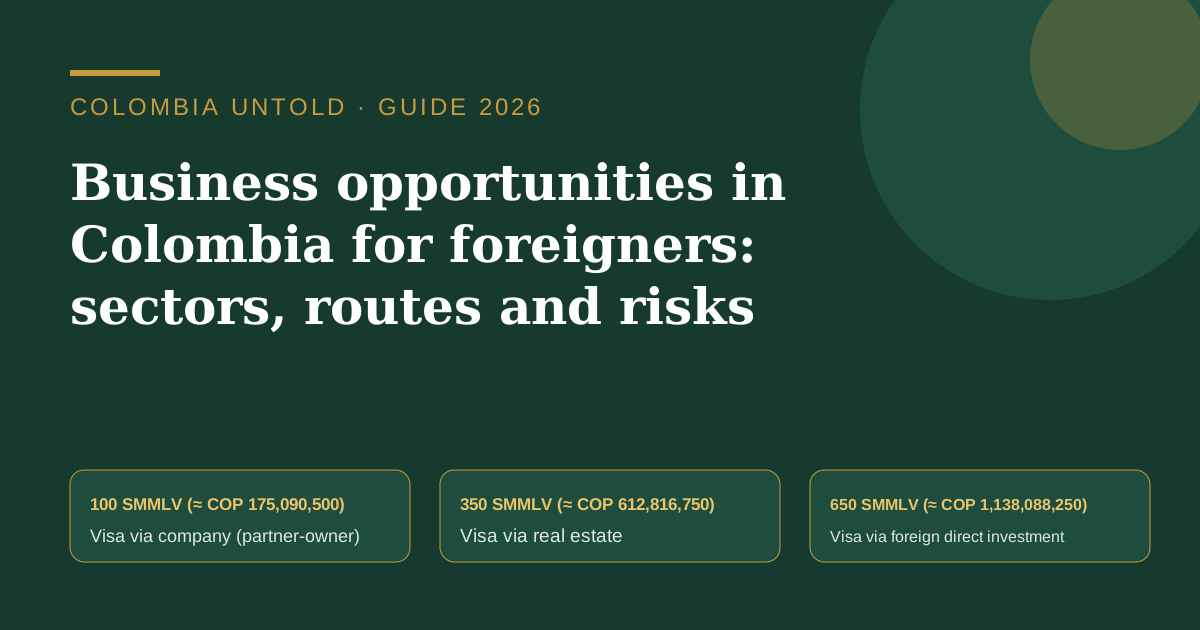
Some investments can back a migrant investor visa. According to our guides, thresholds are 100 SMMLV for a company partner or owner (COP 175,090,500 with the 2026 SMMLV of COP 1,750,905), 350 SMMLV for real estate (COP 612,816,750) and 650 SMMLV for foreign direct investment (COP 1,138,088,250). Amounts are computed with the wage in force at application and requirements must be confirmed with the Foreign Ministry. A badly registered investment or one below the threshold can leave you without a visa. Read Colombia investor visa 2026 and Investor Visa (M/R): Fatal Errors When Buying Shares, Property, or CDs.
How to validate an opportunity before investing
Ask for financial statements, verify the company's existence in the RUES, review legal records, visit the business, talk to suppliers and clients, compare alternatives and hire independent legal and accounting advice. Be wary of guaranteed returns, time pressure, investments you cannot verify and intermediaries who do not explain costs. In Colombia, as in any country, easy-money offers are the main source of fraud. Remember that the Financial Superintendence warns about unauthorized entities.
Risks to consider
Among the most relevant risks are changing regulation and taxes, exchange-rate risk from peso volatility, compliance costs, procedural delays, security risks in certain areas, competition and dependence on local partners. A good plan includes scenarios, liquidity reserves and ongoing advice. Read Colombia's economic and political outlook: opportunities and risks for foreigners for the macroeconomic context.
Common mistakes of foreign investors
Buying before understanding the market, not registering the investment, relying on a single adviser, mixing personal and business accounts, underestimating compliance costs, ignoring the taxation of their country of residence, signing with partners without clear agreements and assuming what worked in another country will work the same here. A small pilot, with a limited budget, usually teaches more than a big investment made in a hurry.
A 90-day plan to explore a business
Before committing capital, use the first ninety days to validate. In the first month, define your business hypothesis, research the sector in official sources such as Invest in Colombia and DANE, and talk to at least five people operating in it. In the second month, consult a lawyer and an accountant on the legal structure, tax burden and immigration route, and test demand with a small version of your offer. In the third month, decide with data whether you incorporate the company, look for a local partner or drop the idea. This order avoids the costliest error: spending capital on structures before knowing whether the market responds.
Our analysis
Colombia offers real opportunities for foreigners, but the advantage goes to those who treat the country as a specific market and not as a copy of another. The most profitable approach is usually to start with a limited project, a reliable local partner, the investment properly registered and a tax structure planned in advance. For the immigration component, Colombia Visa Legal can guide you; to cover your health and your team's, CoVisas; and if your project is real estate in Medellín, Medellín Advisors and Premium Propiedades can accompany you from search to management.
Frequently asked questions
What are the best sectors to invest in as a foreigner in Colombia?
Among the most sought are tourism, technology and services, agribusiness, energy, health, creative industries, foreign trade and real estate. The best depends on your capital, experience and partners.
Can a foreigner invest in Colombia without being a resident?
In general terms yes, by channeling the investment through the foreign exchange market and registering it with the Bank of the Republic. Residency is a separate procedure tied to your visa.
How much do I need for the investor visa?
According to our guides, 100 SMMLV for company partner or owner (COP 175,090,500), 350 SMMLV for real estate (COP 612,816,750) and 650 SMMLV for foreign direct investment (COP 1,138,088,250), with the 2026 SMMLV.
What is the most common way to start a business?
Incorporating a Simplified Stock Company (SAS) at the Chamber of Commerce and registering the foreign investment with the Bank of the Republic.
What risks does investing in Colombia carry?
Regulatory and tax changes, exchange-rate volatility, compliance costs, competition and dependence on local partners. They are mitigated with advice, scenarios and a limited initial investment.
How do I avoid fraud when investing?
Verify the counterparty in the RUES, ask for financial statements, hire independent advice and be wary of guaranteed returns or time pressure.
Which sectors offer opportunities in Colombia?
Services, technology, tourism, energy, agribusiness and manufacturing are among the sectors of interest.
What is ProColombia?
It is the agency promoting exports, tourism, investment and the country brand.
Do I need a local partner?
Not generally mandatory, though it can help.
Are any sectors restricted to foreigners?
There are restrictions in activities such as defense or security.
Which company type suits me?
The SAS is a frequent choice for its flexibility.
Can I open a tourism business?
Yes, complying with the National Tourism Registry and sector rules.
What is the National Tourism Registry?
It is the mandatory registry of tourism service providers.
Can I open a restaurant?
Yes, with permits such as land use, health and commercial registration. Requirements vary by municipality.
Which investor visa do I need?
There are M visas for investors with minimum amounts in SMMLV.
How do I evaluate a business before buying it?
Commission due diligence.
What is impact entrepreneurship?
Businesses with a social or environmental purpose. Incentives exist in some cases.
What about innovation and technology in Colombia?
There is a startup ecosystem, especially in Bogotá and Medellín.
What risks come with starting a business?
Paperwork, regulatory change, exchange rate and competition.
How do I protect my brand?
By registering it with the Superintendencia de Industria y Comercio.
Where do I find advice?
Lawyers, accountants and chambers of commerce. For property in Medellín, consult Medellín Advisors and Premium Propiedades.
What is inbound tourism?
It is the tourism that receives foreign visitors, a sector with high potential in destinations such as Cartagena, Medellín and the coffee region.
What is the orange economy?
It is the set of creative and cultural industries, such as design, music, film and digital content.
What is agribusiness in Colombia?
It includes coffee, flowers, bananas, Hass avocado, cocoa and other products with export markets.
What about renewable energy in Colombia?
There are solar, wind and hydroelectric projects, and the country promotes the energy transition with incentives.
What is a franchise?
It is a model in which you pay to use a brand and its business system. National and international franchises operate in the country.
Which service sectors are in demand?
Technology services, contact centers, consulting, education and health are in growing demand.
How do I register a trademark?
With the Superintendencia de Industria y Comercio, indicating the class of products or services it identifies.
Can I import products to sell?
Yes, by registering with the DIAN and meeting the customs and sanitary requirements for the product.
Which city is best to found a startup?
Bogotá and Medellín concentrate the most startup activity, investors and tech talent.
Where can I get support to invest in real estate in Medellín?
Medellín Advisors and Premium Propiedades accompany foreign investors in the Medellín real estate market.
If you are evaluating housing or investment, Medellín Advisors can guide you on search, title review and the purchase or rental process. Always hire independent legal review.
Key figures and data
| Item | Value | Note |
|---|---|---|
| Visa via company (partner-owner) | 100 SMMLV (≈ COP 175,090,500) | With the 2026 minimum wage of COP 1,750,905; confirm the current figure |
| Visa via real estate | 350 SMMLV (≈ COP 612,816,750) | Threshold per our guides |
| Visa via foreign direct investment | 650 SMMLV (≈ COP 1,138,088,250) | Threshold per our guides |
| Trade agreements promoted by ProColombia | 18 | With access to over 1,500 million consumers, per ProColombia |
Official sources and reliable reading
Related guides
- Best bilingual and international schools in Colombia: how to choose for your children
- Colombia's economic and political outlook: opportunities and risks for foreigners
- What is changing for foreigners living in Colombia in 2026
General information based on current rules and practice; it may change. Confirm your case with the official source or an authorized professional. Not legal, tax or medical advice.